 Carkeyglobal.com













Future of car keys: from keycards to biometric access
Car keys have evolved tremendously over the past few decades. From simple metal keys to remote controls, from keyless systems to keycards. And now we are on the eve of a new era: biometric access to our cars.
In this article, we take you through the evolution of the car key, look at the role of Asian brands such as , XPeng and NIO, and discuss how keycards and smart keys are paving the way for biometric technology.
From metal key to smart key
In the 1980s and 1990s, the traditional metal key was still the norm. Around the turn of the century, the first remote controls emerged: useful for opening doors remotely.
This was followed by smart keys and keyless entry systems. Increasingly, there was no need to physically use the key; having it near the car was sufficient. While this provided convenience, it also created new vulnerabilities, such as relay attacks.
The rise of keycards
How do keycards work?
Keycards became famous thanks to Tesla, but are now also popular with Asian brands such as XPeng and
. The principle is simple: a flat card with NFC technology is used to open doors and start the car.
Advantages and disadvantages of keycards
Keycards are light, compact and easy to replace. Yet they are also prone to wear and tear, users lose them faster, and they must be physically held against a sensor. For some drivers, that feels less intuitive than a smartphone or smart key.
Smartphone keys: convenience in your pocket
With the rise of smartphones came the logical next step: the digital key app.
How does a smartphone key work?
The smartphone acts as a key via Bluetooth or NFC. You only need to open the app or sometimes not even that - the car recognizes your phone as soon as you get close.
Disadvantages of smartphone keys
Low phone battery = no access to the car.
Problems with Bluetooth or internet connection.
Security concerns around hacking attempts or malware.
Still, smartphone keys are gaining popularity, mainly because you can easily share digital access with others.
Biometric access: the future of the car key
Biometrics means the car recognizes you by unique body characteristics, such as your fingerprint, facial recognition or even your voice.
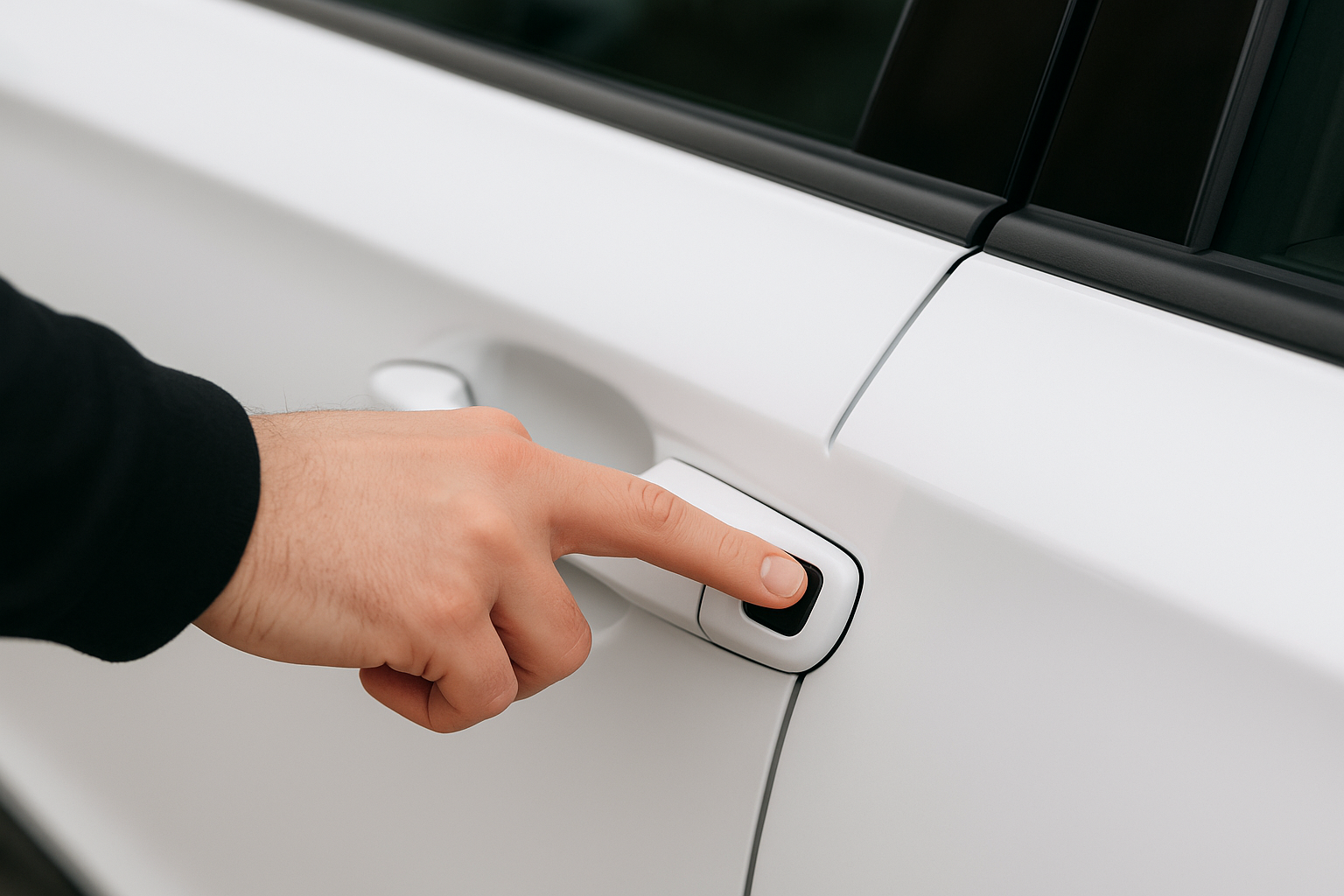
Fingerprint recognition
Several concept cars from
and NIO are already experimenting with fingerprint scanners on the door handle or in the start button.
Facial recognition
XPeng has developed models where cameras in the door or in the cockpit recognize the driver and automatically unlock the car.
Voice recognition
Some EVs use voice control not only to operate functions but also to provide access. However, this is less reliable because of noise and impersonation hazards.
The advantages of biometric car keys
Unique and personal - No duplicates possible.
Greater security - Harder to hack than keyless signals.
Ease of use - No more need for a key or smartphone.
Integration with settings - Car automatically adjusts seat, mirrors and infotainment.